(205) 633-3606


(205) 633-3606





As with any sporting activity, it’s very important to be aware of the safety precautions needed to help avoid injury and reduce risk. With that being said, injuries of the foot are fairly common among those who actively participate in sports.
Some sports may be considered more dangerous in terms of foot injuries compared to others. These sports may include basketball, running, football, soccer, and dancing. Sports that require tightly worn shoes as well as have a particular focus on jumping typically run a higher risk of injury. Because the feet are considered the foundation of the body, help us stay balanced, and enable us to perform our everyday activities, professional help should be sought at the first instinct of something gone wrong.
Some common contributors that lead to foot injuries in the realm of sports include not stretching properly or failing to warm up, wearing the incorrect footwear needed for your particular sport, as well as not taping or providing your feet with the needed support. There are a number of foot conditions that can develop if certain safety measures are ignored. Some of the most common conditions related to sports injuries include Achilles tendinitis, plantar fasciitis, and stress fractures, to name a few.
Achilles tendinitis affects the largest tendon in the body, the Achilles tendon. This type of injury typically occurs because of overuse. The main function of the Achilles tendon is to transmit power from the calf muscles to the heel and the foot. When this tendon is harmed, it can be extremely painful and may lead to further complications including tears, ruptures, tendinitis, peritendinitis, tendinosis, tendinopathy, and bursitis.
Plantar fasciitis may occur when the band of tissues that support the arch of your foot experience too much stress. These tissues can become strained from frequently performing sporting activities, thus causing inflammation and pain at the bottom of the heel.
Stress fractures can arise due to a lack of conditioning, use of improper equipment or technique, and repetitive stress placed on the foot. A stress fracture is a small crack in the bone that can be very painful and cause a great deal of discomfort.
If you commonly participate in sporting activities and would like more information about how to keep your feet safe, as well as learn more about your treatment options if injured, we recommend you speak with a podiatrist for professional guidance and care.
T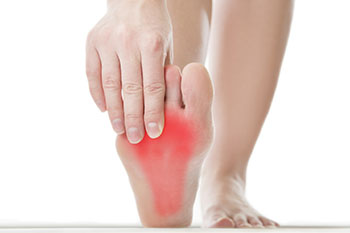 he plantar fascia is a connective tissue in the heel that stretches the bottom length of your foot. Plantar fasciitis is the inflammation of this connective band, causing heel pain and overall discomfort while walking or standing. Although the condition is completely treatable, traditional methods can take up to a year to start being effective.
Plantar fasciitis is caused by a number of everyday activities, so understanding and assessing the condition is paramount to managing and treating it. One of the most common causes of plantar fasciitis is excessive running, especially with improper fitting or non-supportive shoes. By over exercising and running, the plantar fascia gets overworked and overstretched, eventually causing tears in the tissue and inflammation. Along with improper fitting shoes, over-pronation is a common cause of plantar fasciitis. By not having the right shoes to correct this issue, once again the plantar fascia becomes overstretched and starts to tear, causing the inflammation.
Despite the common causes of plantar fasciitis, there are many different treatment options. For less severe cases, conservative home remedies such as taking anti-inflammatory drugs to alleviate pain, applying ice packs to the bottom of your foot and heel, slowly stretching and exercising your feet to re-strengthen the tissue, and using orthotic devices to overcome issues such as over-pronation are all ways to help manage your plantar fasciitis.
For more severe cases however, there are still things that can be done. Shockwave therapy has become a common solution for plantar fasciitis because it effectively breaks up the tissue on the bottom of your foot via sound waves which facilitates healing and regeneration, allowing you to overcome the chronic pain caused by plantar fasciitis. Even if this doesn’t work, surgery is always a final option. Surgery on the tissue itself can be done to permanently correct the issue and stop the inflammation and pain is your heels.
No matter what the case may be however, seeking the immediate care of your podiatrist is the first and best step to recovery. Even the slightest amount of heel pain could be the first stages of plantar fasciitis and the initial onset of tearing and overstretching of that band of tissue. On top of this, because the tearing of this tissue can be compounded if it remains ignored, it could become a more severe case than it needs to be. The solution to this is early detection and early treatment, so be sure to talk to your podiatrist about the possibilities of plantar fasciitis if you’re experiencing heel pain.
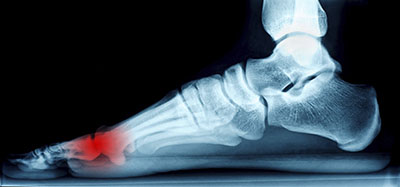
Morton’s neuroma may develop when the tissue around one of the nerves leading to your foot begins to thicken. When this occurs, you may experience some discomfort as if you were standing on a pebble stuck in your shoe. Most symptoms will not appear outwardly and will be experienced in the form of a sharp, burning pain in the ball of the foot, as well as a stinging or burning feeling in the toes that may sometimes lead to numbness.
Some factors that contribute to the formation of Morton’s neuroma include wearing high heels or ill-fitting shoes that put extra pressure on your toes or the balls of your feet. There has also been a tie to the development of Morton’s neuroma and certain high-impact sporting activities. Activities you may want to avoid from participating in too frequently include both jogging and running. Too much repetitive trauma can cause a strain on the feet and increase the chances of developing a foot complication. Other sports that require the use of tightly worn shoes, such as skiing or rock climbing, may also increase your chances of getting Morton’s neuroma. Certain foot deformities can also lead to the development of Morton’s neuroma. Some of these deformities that increase the likelihood of getting this condition include bunions, hammertoes, and flat feet.
Treatment for Morton’s Neuroma will often vary, depending on the severity of a patient’s condition. In some cases, injections may be helpful for alleviating pain. Another form of treatment is decompression surgery, in which a podiatrist will work to alleviate the pressure on the nerve. In more severe cases, full removal of the nerve would be required.
If you’d like more information about Morton’s neuroma, we suggest you consult with a podiatrist for a proper diagnosis and recommended treatment plan.
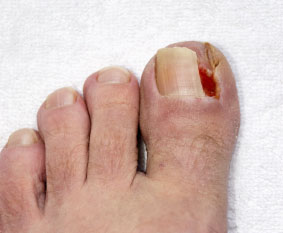
Ingrown toenails can form when the side of a toenail begins to grow into the flesh surrounding the nail. As a result, the affected toe—most commonly the big toe—may become red, swollen, painful, and—in severe cases—infected.
There are many reasons why an ingrown toenail may develop. Improperly cutting your toenails is a major cause of ingrown toenails. If toenails aren’t cut straight across or are cut too short, the likelihood of getting an ingrown toenail may increase. Other causes include having unusually curved toenails, wearing shoes that don’t give your toes an ample amount of space, and hereditary factors. Injuring the toe by stubbing it or having an object fall on it may also lead to ingrown toenails. If left untreated, an ingrown toenail can lead to further complications with the foot.
If you are someone who has diabetes, it’s extremely important to remain mindful of ingrown toenail prevention, as minor cuts or simple scrapes can lead to serious complications. You can prevent ingrown toenails by ensuring toenails are straight across and at a moderate length, wearing shoes that fit properly, and checking feet daily for signs of foot issues.
Treatment for an ingrown toenail will vary on a case by case basis. One form of treatment requires lifting the ingrown nail and placing a splint or piece of cotton underneath. Another method for a more severe case would involve partially removing the nail. For cases that need extreme care, the nail itself and tissue would have to be removed.
If you’d like more information about ingrown toenails, we recommend you consult with a podiatrist who can give you a proper diagnosis and go over your treatment options.
535 Jack Warner Parkway NE
Suite 1A
Tuscaloosa, AL 35404
P: (205) 633-3606
F: (205) 633-3696
| Mon: | 8:00 AM - 5:00 PM* |
| Tues: | 8:00 AM - 5:00 PM** |
| Wed: | 8:00 AM - 5:00 PM** |
| Thur: | 8:00 AM - 5:00 PM** |
| Fri: | 8:00 AM - 12:00 PM*** |
| *Closed for lunch from 12:00 PM - 1:30 PM | |
| **Closed for lunch from 12:00 PM - 1:00 PM | |
| ***Staff only | |